Posted in No category yet

Origin of the Paralympics Games

With the Games starting tomorrow I thought I’d have a delve and find out how the Paralympic Games started. So here goes.

In 1960 the Olympics was held in Rome and included, what is regarded as today, the very first Paralympic Games to run alongside it.

Prior to this, there were some athletes with disabilities that did compete in the Olympics.

First was German-American gymnast George Eyser born in Germany in 1870, whom had an artificial leg due to losing it from an accident with a train. His leg was ran over and he lost most of it, poor man. In 1904 he won 6 medals in a day representing the United States of America, as his parents emigrated to America when George was 14 years old.
Black and white photograph of George standing slightly diagonally, hands behind his back. He wears a tight white vest top and light coloured trousers with a belt. He has deep set eyes and very short light slicked hair.
PICTURE DESCRIPTION Black and white photograph of George standing slightly diagonally, hands behind his back. He wears a tight white vest top and light coloured trousers with a belt. He has deep set eyes and very short light slicked hair.

A Hungarian amputee who competed in Water Polo and Freestyle Swimming events in 3 successive games starting in 1928, was Oliver Halassy born in 1909.

He also had a run in with a train. He was unfortunately hit by one aged 11 and lost his left leg below the knee.

He was part of a water polo team that went on to win 2 gold medals and a silver, for Hungary, in the 3 Olympics he took part in.
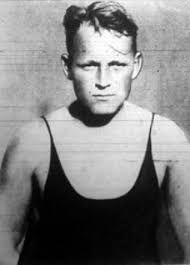
Black and white photograph of a Oliver with disheveled medium fair coloured hair  looking seriously just off the camera . He wears a black vest leotard.
PICTURE DESCRIPTION Black and white photograph of a Oliver with disheveled medium fair coloured hair  looking seriously just off the camera . He wears a black vest leotard.

Another Hungarian Man, Karoly Takacs born in 1910. In both the 1948 and 1952 Summer Olympics he competed in shooting events. He was a right-arm amputee, due to a faulty grenade exploding when he was in army training in 1938.

He went onto win 2 gold medals representing Hungary over the 2 games.
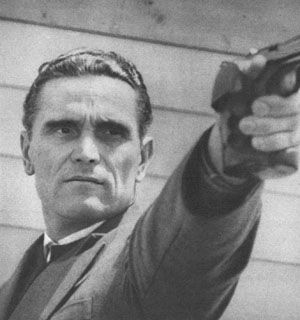
Black and 2hote photograph of Karoly Takacs . Arm outstretched holding a gun. A dark haired man with slicked back hair. A serious look on his face concentrating. Wearing a jumper and blazer.
PICTURE DESCRIPTION Black and 2hote photograph of Karoly Takacs . Arm outstretched holding a gun. A dark haired man with slicked back hair. A serious look on his face concentrating. Wearing a jumper and blazer.

Lis Hartel, born in 1921 Denmark. She was a Danish equestrian athlete who had contracted polio in 1944 whilst pregnant with her 2nd child. She was 23 years old and this permanently paralysed her below the knees as well as affecting her arms and hands. Despite this her daughter Anne was born healthy.

She won a silver medal in the individual dressage event in the 1952 Summer Olympics.
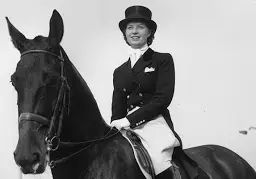
Black and white photograph of a short curly style dark haired woman sitting on a dark coloured horse. She’s smiling and wears a smart cropped jacket, top hat and white jodhpurs.
PICTURE DESCRIPTION Black and white photograph of a short curly style dark haired woman sitting on a dark coloured horse. She’s smiling and wears a smart cropped jacket, top hat and white jodhpurs.

The first organized athletic event for athletes with disabilities that coincided with the Olympic Games took place on the day of the opening of the 1948 Summer Olympics in London. The German-Jewish doctor Ludwig Guttmann, of Stoke Mandeville Hospital, hosted a sports competition for British World War 2 veteran patients with spinal cord injuries.

He was looking to help his paraplegic patients heal quicker and take an interest in life and exercise after injury.

The first games were called the 1948 International Wheelchair Games, and were intended to coincide with the 1948 Olympics. Guttman’s aim was to create an elite sports competition for people with disabilities that would be equivalent to the Olympic Games.

16 injured sportsmen and women competed through archery.

Overtime, more sports and nationalities were added.

In 1952 Dutch and Israeli veterans took part alongside the British, making it the first international competition of it’s own kind.

Eventually, it had expanded and was organised to run alongside of the Olympic Games in Rome 1960.

From 1960 to 1980 these games were known as The International Stoke Mandeville Games.

In 1984, the IOC (International Olympic Committee) approved the name to be used as the ‘Paralympic Games’ from then on.

Posted in Funny Stories

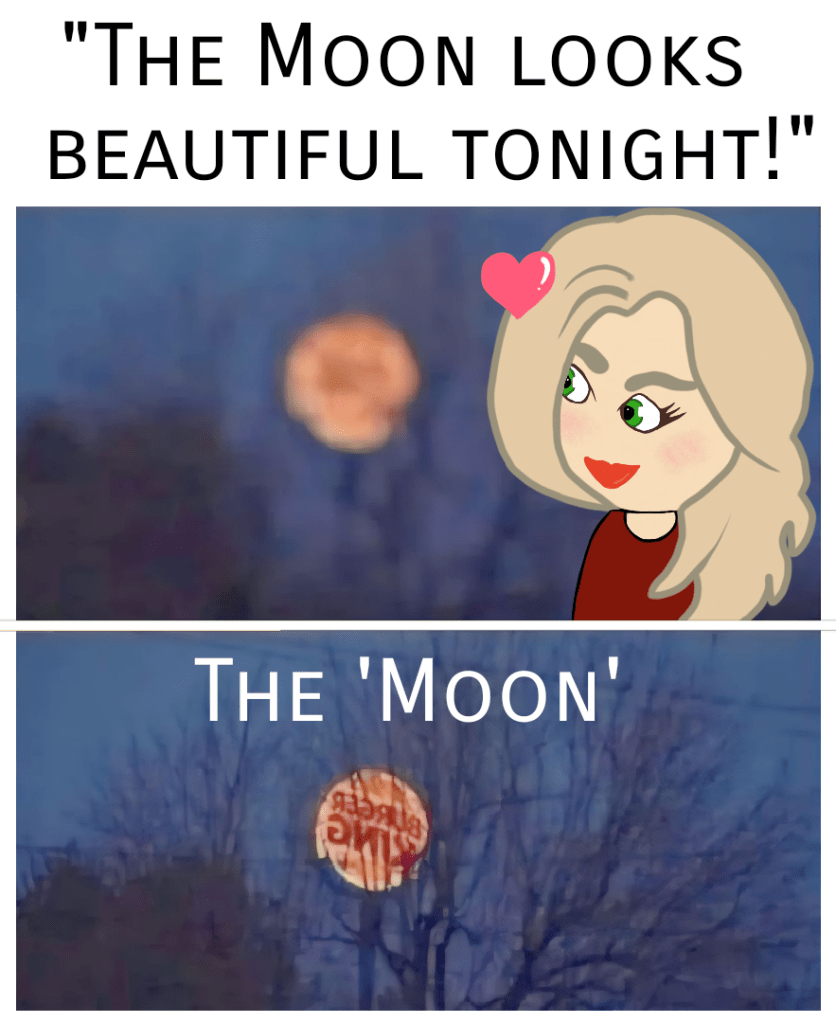
Supermoon

Sightloss problems.

PICTURE DESCRIPTION Blonde haired cartoon style woman looking up to the sky at nighttime. Thinking she sees the Supermoon, when the moon she thinks she sees is a light up round Burger King sign

Posted in Funny Stories

“Are they drumsticks mate?”

Being in a couple where both of us have genetic eye conditions. Richard my better half, due to a genetic eye condition called  Choroideremia, uses a white cane to get around, and Me, diagnosed with Macular Dystrophy, just basically falls about and wings it, we are prepared to come across some questions which we will gladly answer.

We’ve had some funny things happen to us in our time together.

Recently we went on a seaside trip to celebrate our anniversary.

We help each other as our conditions  are sort of the opposite from each other.

We’ve sort of mastered getting around together. Though there are sacrifices and difficulties especially somewhere new.

It’s easy if we both really know a place like Scarborough.

So we walk into a pub as we wanted a drink before heading to the theatre.
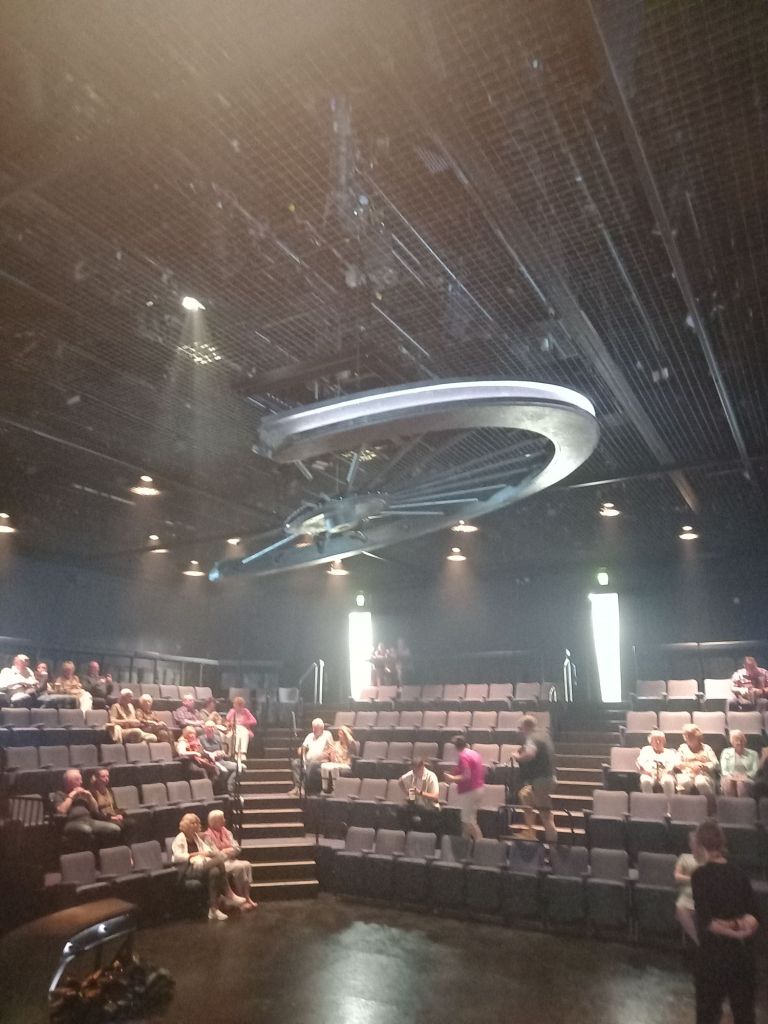
(Brassed off as a surprise treat for Rich at the Stephen Joseph Theatre in Scarborough. Absolutely amazing. Definitely recommend it)

I was navigating us to a seat. Then Rich looks at the phone app or menu with his glasses on as it’s easier for him to read than myself, orders us both a drink.

So you can understand why we get some looks.

Sat down there’s no visible sign either of us have sightloss.

One fella came up. He had been partaking, with his friend, many of the drinks on offer and approached us. Proper wobble on.

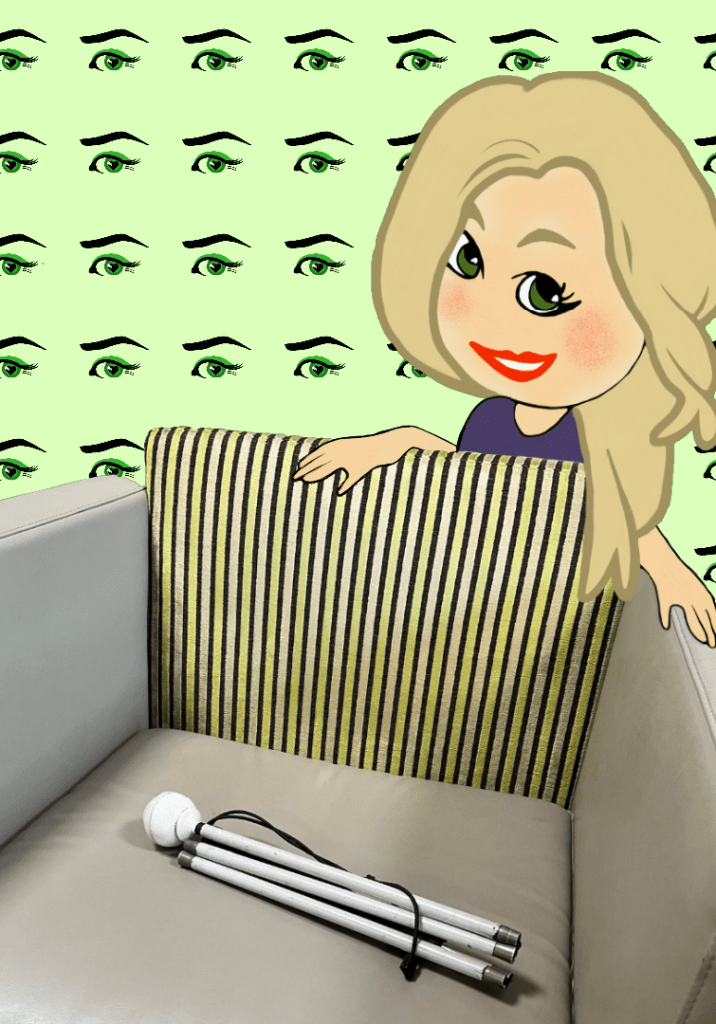
Pointing to the folded cane on the chair he said and I quote…

“Are those drumsticks mate?”

Lots of mad waving by his friend and apologies.

Richard explained what it was and why.

He couldn’t stop saying sorry. We found it incredibly funny and told him not to worry.

Well at least of anything.  One thing I’m trying to do out and about and with this blog is dispell misconceptions about blindness.

PICTURE DESCRIPTION Picture of a chair with a folded up white cane with a cartoon woman with long blonde hair and purple vest top smiling behind the seat.
PICTURE DESCRIPTION 2
The black stage in the middle of people sat in seats surrounding it. A pit wheel raised above the stage. View from my seat 3 rows up.
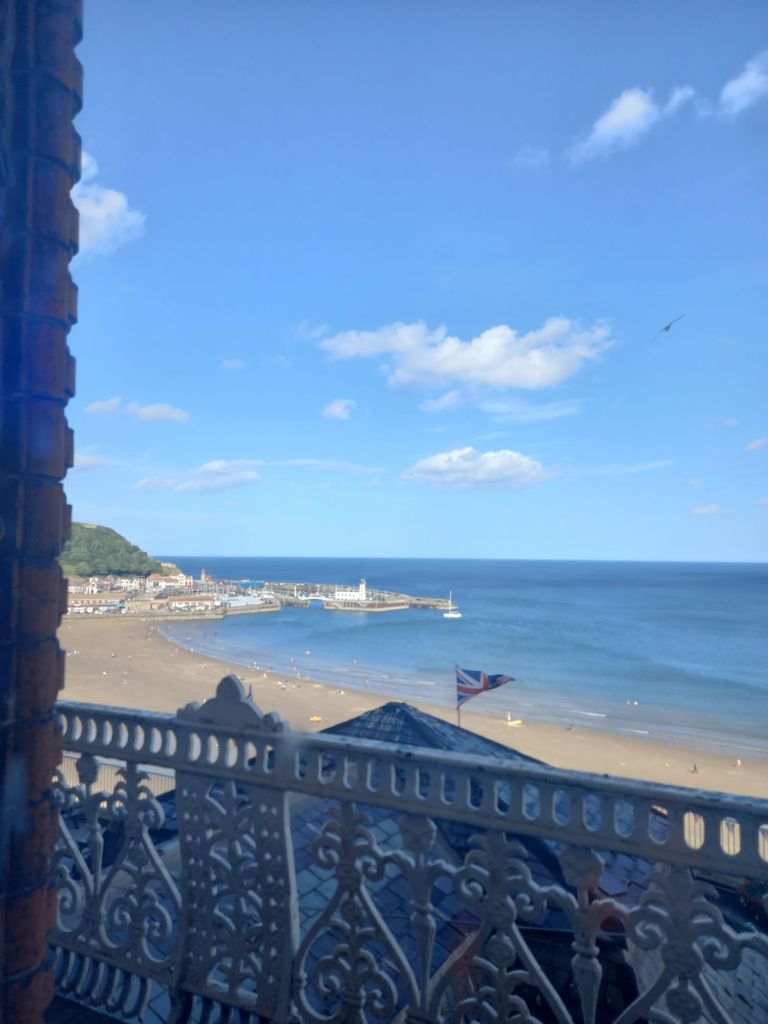
PICTURE DESCRIPTION 3
Picture of the view from our hotel room window. Scarborough Bay with sun shining onto the beach. Balcony to the outside of the window.

#WhiteCane  #BlindMisconceptions #Choroideremia #InvisibleDisability
#Scarborough #Seaside #SeasideHoliday
#StephenJosephTheatre
#BrassedOff