
With the Games starting tomorrow I thought I’d have a delve and find out how the Paralympic Games started. So here goes.
In 1960 the Olympics was held in Rome and included, what is regarded as today, the very first Paralympic Games to run alongside it.
Prior to this, there were some athletes with disabilities that did compete in the Olympics.
First was German-American gymnast George Eyser born in Germany in 1870, whom had an artificial leg due to losing it from an accident with a train. His leg was ran over and he lost most of it, poor man. In 1904 he won 6 medals in a day representing the United States of America, as his parents emigrated to America when George was 14 years old.
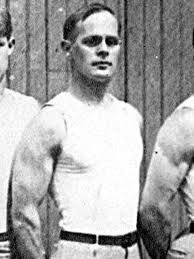
A Hungarian amputee who competed in Water Polo and Freestyle Swimming events in 3 successive games starting in 1928, was Oliver Halassy born in 1909.
He also had a run in with a train. He was unfortunately hit by one aged 11 and lost his left leg below the knee.
He was part of a water polo team that went on to win 2 gold medals and a silver, for Hungary, in the 3 Olympics he took part in.
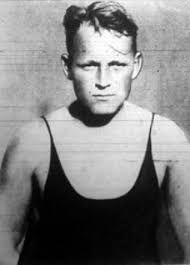
Another Hungarian Man, Karoly Takacs born in 1910. In both the 1948 and 1952 Summer Olympics he competed in shooting events. He was a right-arm amputee, due to a faulty grenade exploding when he was in army training in 1938.
He went onto win 2 gold medals representing Hungary over the 2 games.
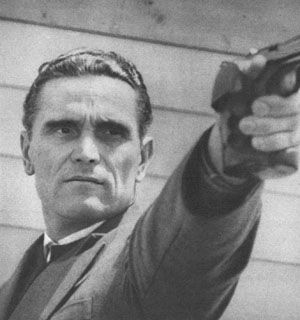
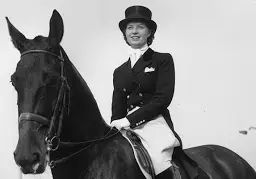
Lis Hartel, born in 1921 Denmark. She was a Danish equestrian athlete who had contracted polio in 1944 whilst pregnant with her 2nd child. She was 23 years old and this permanently paralysed her below the knees as well as affecting her arms and hands. Despite this her daughter Anne was born healthy.
She won a silver medal in the individual dressage event in the 1952 Summer Olympics.
The first organized athletic event for athletes with disabilities that coincided with the Olympic Games took place on the day of the opening of the 1948 Summer Olympics in London. The German-Jewish doctor Ludwig Guttmann, of Stoke Mandeville Hospital, hosted a sports competition for British World War 2 veteran patients with spinal cord injuries.
He was looking to help his paraplegic patients heal quicker and take an interest in life and exercise after injury.
The first games were called the 1948 International Wheelchair Games, and were intended to coincide with the 1948 Olympics. Guttman’s aim was to create an elite sports competition for people with disabilities that would be equivalent to the Olympic Games.
16 injured sportsmen and women competed through archery.
Overtime, more sports and nationalities were added.
In 1952 Dutch and Israeli veterans took part alongside the British, making it the first international competition of it’s own kind.
Eventually, it had expanded and was organised to run alongside of the Olympic Games in Rome 1960.
From 1960 to 1980 these games were known as The International Stoke Mandeville Games.
In 1984, the IOC (International Olympic Committee) approved the name to be used as the ‘Paralympic Games’ from then on.


 One Vision Blog