Posted in The Medical Stuff

Best disease – macula

Clipboard with Kellys story written on it
Kellys story.
She has a form of Macular dystrophy called Best disease. So very similar to what I have.
Posted in The Medical Stuff

Photoreceptors – Cone and Rods

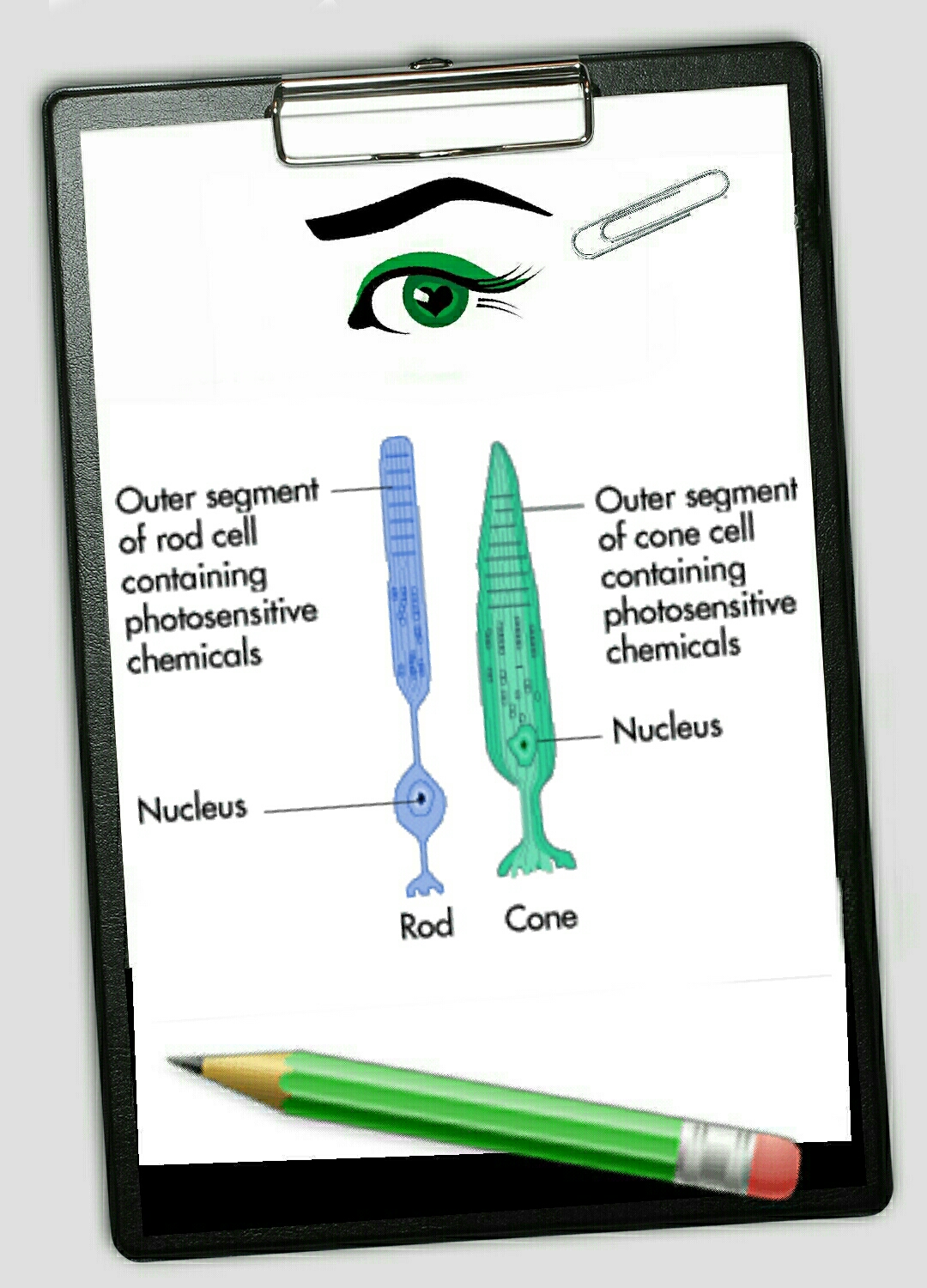
Diagram of cone and rod functions described in the text on the blog post here

The retina contains light-sensing cells called photoreceptors.
There are two types of photoreceptors: rods and cones.
Together, rod and cones detect light and convert it into electrical signals, which are then “seen” by the brain. Rods are found in the outer retina and help us see in dim and dark lighting. Cones are found in the macula and help us see fine visual detail and colour.
Both cones and rods die away in Stargardt disease, but for unclear reasons, cones are more strongly affected in most cases.
I\’ve posted before about vitamin A.
Vitamin A is needed to make key light-sensitive molecules inside photoreceptors. Unfortunately, this manufacturing process can lead to harmful . vitamin A byproducts — which turn out to play a key role in Stargardt disease.
Mutations in a gene called ABCA4 are the most common cause of Stargardt disease. This gene makes a protein that normally clears away vitamin A byproducts inside photoreceptors. Cells that lack the ABCA4 protein accumulate clumps of lipofuscin, a fatty substance that forms yellowish flecks. As the clumps of lipofuscin increase in and around the macula, central vision becomes impaired.
Eventually, these fatty deposits lead to the death of photoreceptors and vision becomes further impaired.
So unfortunately eventually my colour vision will fade.
Posted in The Medical Stuff

Macular Dystrophy v Macular Degeneration

These 2 conditions are very similar in symptoms and outcome but are not the same.
In comparison with macular dystrophy, macular degeneration is typically an age related disease process of the macula. Wear and tear. It is far more common than macular dystrophy. In fact macular degeneration is the most common cause for “legal blindness” for people over the age of 65. Experts define legal blindness as a reduction of best corrected vision (meaning vision with best glasses or contact lenses) to 20/200 or less. Macular degeneration, although it has hereditary components, does not follow clear hereditary patterns. So, not all people with a family history of macular degeneration will suffer from the disease. Other risk factors for age related macular degeneration include: advancing age, exposure to UV radiation, smoking, obesity, and diets low in specific carotenoids such as lutein and zeaxanthin

As you can see, a number of these risk factors for the development of macular degeneration are “modifiable” and as such within our control.

There are 2 types. Dry, which cannot be treated, and Wet, you may need regular eye injections and occasionally a light treatment called to stop your vision getting worse.

Vitamin A is recommended for Macular Degeneration but not for Macular dystrophy.

My Macular Dystrophy is linked to genetic mutations that, for no apparent reason, other than the gene is faulty triggers degradation of retinal cells. Some forms of macular dystrophy appear in childhood, and other forms appear in adulthood. Like mine in my 40’s.

It is classed as a rare disease and therefore unfortunately doesn’t get enough awareness and nobody has ever seemed to have heard of it unless you yourself have it or someone you know.