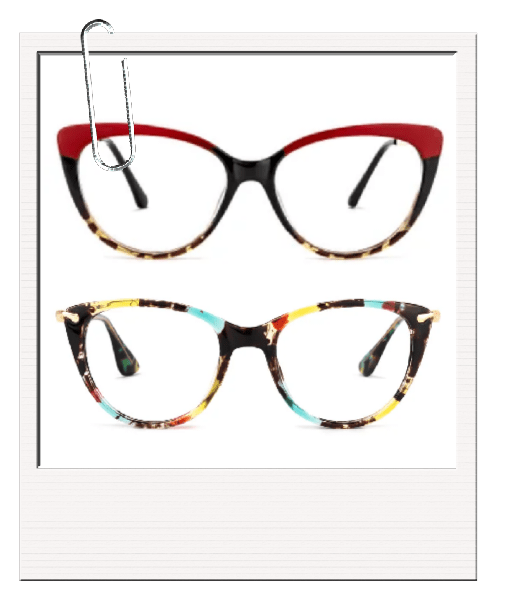
PICTURE DESCRIPTION 2 pairs of glasses framed like a Polaroid photograph. First pair is red black with Tortoishell at the bottom. Second pair a multicoloured paint splatter effect.
2 new pairs of cats eye glasses and I’ve gone a bit different to my usual standard tortoishell.
I’ve gone bolder and now have 4 pairs of glasses to add to my collection, so I can chop and change until I need another prescription like I usually do at my next appointment.
I tried something different. I bought them online choosing the frames first and then entering my last prescription into the form they have. They are really good and alot cheaper than the high Street. The styles are more unusual and these came safely all the way from America.
My glasses are very important to me as they correct some blur and help me to read and look at pictures better than I can normally. It’s virtually impossible now to make words or images out, without them.
They don’t help the blind spot, floaters or missing parts of words and images. They will help until they don’t anymore.
Today the Paralympic Games start in Paris with the opening ceremony later on today at 8pm local time. 7pm in the UK.
The ceremony is going to be abit different as this isn’t situated in the stadium as such, but by the River Seine, Place de la Concorde and the lower Champs Élysées.
For the occasion, 50,000 spectators will be able to enjoy the show (15,000 free of charge (first come, first served) and another 35,000 whom purchased their tickets.
Team GB has 215 athletes that hail from Great Britain and Northern Ireland. The British Paralympians will be competing in 19 of the 22 sports on the programme, with cycling, canoeing and rowing being the largest delegations.
Athletes are grouped together according to their classification in each event. Some compete in wheelchairs and some with prostheses, while those who are vision impaired can receive support from a sighted guide. There are also events for athletes of short stature and for those with an intellectual impairment.
The sports GB are competing in are:-
Archery, Badminton, Boccia, Canoeing, Cycling, Equestrian, Football 5 a side, Goalball, Judo, Athletics, Powerlifting, Swimming, Rowing, Shooting, Volleyball, Table Tennis, Taekwando, Triathlon, Basketball, Fencing, Rugby and Tennis.
PICTURE DESCRIPTION In the background the Olympic rings. Blue yellow black green and red. A cartoon woman with blonde hair and yellow top with arms raised smiling holding the Olympic torch in the forefront. Text reads Good Luck Team GB Paris 2024
With the Games starting tomorrow I thought I’d have a delve and find out how the Paralympic Games started. So here goes.
In 1960 the Olympics was held in Rome and included, what is regarded as today, the very first Paralympic Games to run alongside it.
Prior to this, there were some athletes with disabilities that did compete in the Olympics.
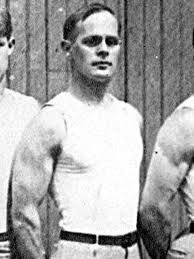
First was German-American gymnast George Eyser born in Germany in 1870, whom had an artificial leg due to losing it from an accident with a train. His leg was ran over and he lost most of it, poor man. In 1904 he won 6 medals in a day representing the United States of America, as his parents emigrated to America when George was 14 years old.
PICTURE DESCRIPTION Black and white photograph of George standing slightly diagonally, hands behind his back. He wears a tight white vest top and light coloured trousers with a belt. He has deep set eyes and very short light slicked hair.
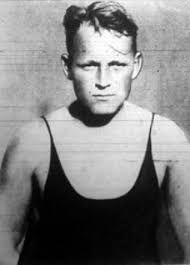
A Hungarian amputee who competed in Water Polo and Freestyle Swimming events in 3 successive games starting in 1928, was Oliver Halassy born in 1909.
He also had a run in with a train. He was unfortunately hit by one aged 11 and lost his left leg below the knee.
He was part of a water polo team that went on to win 2 gold medals and a silver, for Hungary, in the 3 Olympics he took part in.
PICTURE DESCRIPTION Black and white photograph of a Oliver with disheveled medium fair coloured hair looking seriously just off the camera . He wears a black vest leotard.
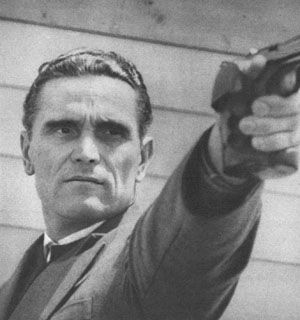
Another Hungarian Man, Karoly Takacs born in 1910. In both the 1948 and 1952 Summer Olympics he competed in shooting events. He was a right-arm amputee, due to a faulty grenade exploding when he was in army training in 1938.
He went onto win 2 gold medals representing Hungary over the 2 games.
PICTURE DESCRIPTION Black and 2hote photograph of Karoly Takacs . Arm outstretched holding a gun. A dark haired man with slicked back hair. A serious look on his face concentrating. Wearing a jumper and blazer.
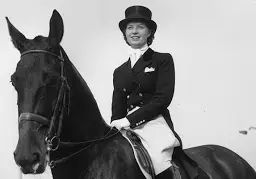
Lis Hartel, born in 1921 Denmark. She was a Danish equestrian athlete who had contracted polio in 1944 whilst pregnant with her 2nd child. She was 23 years old and this permanently paralysed her below the knees as well as affecting her arms and hands. Despite this her daughter Anne was born healthy.
She won a silver medal in the individual dressage event in the 1952 Summer Olympics.
PICTURE DESCRIPTION Black and white photograph of a short curly style dark haired woman sitting on a dark coloured horse. She’s smiling and wears a smart cropped jacket, top hat and white jodhpurs.
The first organized athletic event for athletes with disabilities that coincided with the Olympic Games took place on the day of the opening of the 1948 Summer Olympics in London. The German-Jewish doctor Ludwig Guttmann, of Stoke Mandeville Hospital, hosted a sports competition for British World War 2 veteran patients with spinal cord injuries.
He was looking to help his paraplegic patients heal quicker and take an interest in life and exercise after injury.
The first games were called the 1948 International Wheelchair Games, and were intended to coincide with the 1948 Olympics. Guttman’s aim was to create an elite sports competition for people with disabilities that would be equivalent to the Olympic Games.
16 injured sportsmen and women competed through archery.
Overtime, more sports and nationalities were added.
In 1952 Dutch and Israeli veterans took part alongside the British, making it the first international competition of it’s own kind.
Eventually, it had expanded and was organised to run alongside of the Olympic Games in Rome 1960.
From 1960 to 1980 these games were known as The International Stoke Mandeville Games.
In 1984, the IOC (International Olympic Committee) approved the name to be used as the ‘Paralympic Games’ from then on.




 One Vision Blog