Posted in Research for a cure or treatment for us, The Medical Stuff

Stem cell research for Stargardt Disease

Research for a cure ☺️
At the moment, Stargardt’s, Macular dystrophy, is untreatable.
A number of novel interventions are currently under investigation, including stem cell therapies.
Stem cells are a special type of cell which, when put under the right conditions, can develop into many other types of cell including those found in the macular. It is hoped that new cells derived from stem cells can be grown in a laboratory to be transplanted into the eye to replace areas of dead or non-functioning cells.
Stem cells can be sourced from a number of places including blood, bone marrow, umbilical cord and fertilized egg cells.
Researchers are involved in the first ongoing stem cell trial for Stargardt’s. More research will need to be undertaken in the future to determine to what extent stem cell therapy might help improve vision for people with Stargardt’s and the other conditions know as Macular Dystrophies.
This is ongoing and will hopefully turn out to be a cure or treatment for Macular Dystrophies.
Until then, we have to protect our eyes from further deterioration by using UV and blue light blocking, polarized sunglasses, make sure we don’t take onboard too much vitamin A, but don’t deprive yourself, as we need Vitamin A for good health elsewhere. Just don\’t take supplements with this vitamin included. Vitamin A causes the build up of lipofuscin, as our eyes do not process the waste correctly, causing the central vision to fade.
Posted in The Medical Stuff

Best disease – macula

Clipboard with Kellys story written on it
Kellys story.
She has a form of Macular dystrophy called Best disease. So very similar to what I have.
Posted in The Medical Stuff

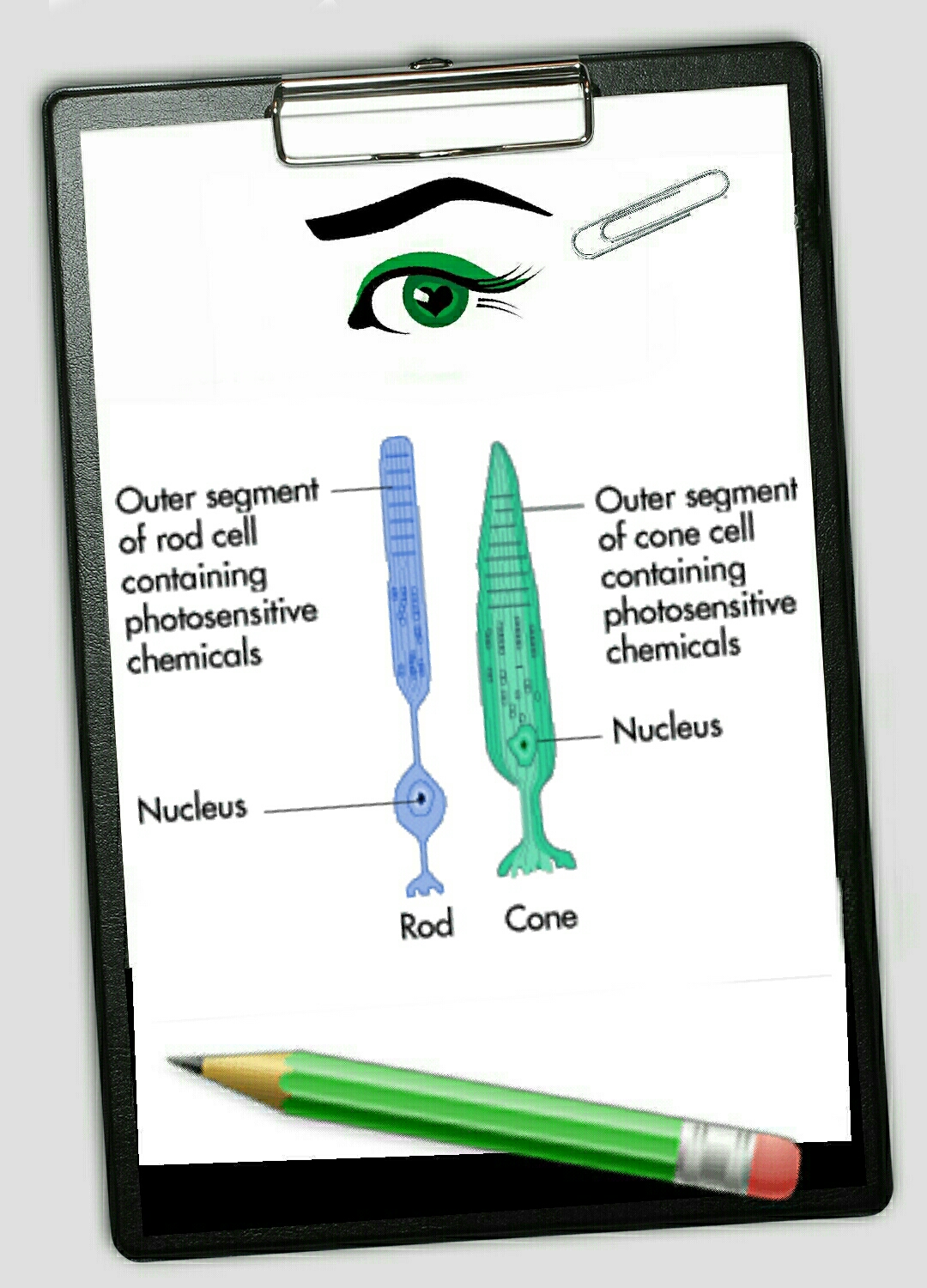
Photoreceptors – Cone and Rods

Diagram of cone and rod functions described in the text on the blog post here

The retina contains light-sensing cells called photoreceptors.
There are two types of photoreceptors: rods and cones.
Together, rod and cones detect light and convert it into electrical signals, which are then “seen” by the brain. Rods are found in the outer retina and help us see in dim and dark lighting. Cones are found in the macula and help us see fine visual detail and colour.
Both cones and rods die away in Stargardt disease, but for unclear reasons, cones are more strongly affected in most cases.
I\’ve posted before about vitamin A.
Vitamin A is needed to make key light-sensitive molecules inside photoreceptors. Unfortunately, this manufacturing process can lead to harmful . vitamin A byproducts — which turn out to play a key role in Stargardt disease.
Mutations in a gene called ABCA4 are the most common cause of Stargardt disease. This gene makes a protein that normally clears away vitamin A byproducts inside photoreceptors. Cells that lack the ABCA4 protein accumulate clumps of lipofuscin, a fatty substance that forms yellowish flecks. As the clumps of lipofuscin increase in and around the macula, central vision becomes impaired.
Eventually, these fatty deposits lead to the death of photoreceptors and vision becomes further impaired.
So unfortunately eventually my colour vision will fade.